


The pressure rating and temperature rating of American standard gate valves are mainly determined based on standards such as the American Society of Mechanical Engineers (ASME) and the American Petroleum Institute (API), which need to be comprehensively considered in combination with material characteristics, working conditions, and standard specifications. The following are the specific determination methods and core basis:
1、 Determination of pressure level
1. Core standards and representation methods
Standard basis:
Mainly following ASME B16.34 "Valve Flanged Connections, Threaded Connections, and Welded Connections", the pressure rating is represented by "Class" (pounds), and common grades include Class 150, 300, 400, 600, 900, 1500, 2500, etc.
Define Logic:
The Class value represents the maximum allowable working pressure (psi) of the valve at 100 ° F (38 ℃), but it needs to be adjusted based on the actual operating temperature (see temperature effects below). For example:
The maximum working pressure of Class 150 at 100 ° F is 285 psi (approximately 2.0 MPa),
Class 300 is 600 psi (approximately 4.1 MPa) at 100 ° F.
2. Factors affecting pressure levels
Material strength:
The tensile strength at room temperature of different materials (such as carbon steel WCB, stainless steel CF8, alloy steel WC6, etc.) determines the basic pressure grade and must meet the allowable stress requirements of ASME BPVC VIII-1 for materials.
Structural design:
The type of valve (such as Gate valve, Globe valve), connection method (flange, welding), and end form (RF protrusion, RTJ ring connection) affect the upper limit of pressure rating. For example, RTJ connection is usually suitable for high pressure scenarios of Class 600 and above.
Testing requirements:
Shell test (1.5 times nominal pressure) and seal test (1.1 times nominal pressure) (according to API 598 standard) are required to ensure the safety of the pressure rating.
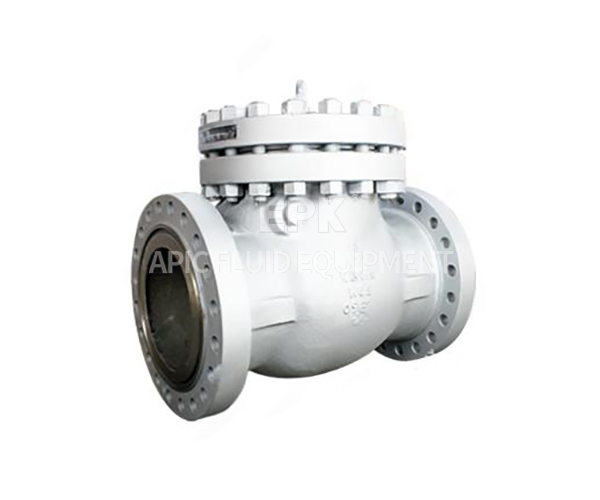
2、 Determination of temperature level
The temperature level should be combined with the temperature pressure rating and operating temperature range of the material. The core logic is that as the temperature increases, the material strength decreases, and the allowable working pressure decreases accordingly; When the temperature is too low, material brittleness (such as low-temperature impact toughness) should be considered.
3、 The coupling relationship between pressure and temperature
The rated pressure of American standard gate valves must meet both the "Temperature Pressure Rating Table" and the allowable stress of the material at the corresponding temperature. The specific steps are as follows:
Determine operating parameters: specify the medium temperature (T) and maximum working pressure (P).
Material selection: Select materials (such as WCB, CF8, etc.) based on the corrosiveness of the medium and temperature range.
Check the rating table: Find the temperature pressure gauge corresponding to the selected material in ASME B16.34, and determine the maximum allowable pressure P_max at temperature T.
Verify safety: Ensure that the actual working pressure P ≤ P_max and the allowable stress of the material at T temperature is ≥ the calculated stress (based on pressure and wall thickness).
summarize
The pressure rating and temperature rating of American standard gate valves are a combination of material characteristics, operating requirements, and standard specifications:
The pressure level is represented by Class, based on the rated pressure at room temperature, and needs to be verified through material strength and testing;
The temperature level is adjusted through a temperature pressure correction table, reducing the allowable pressure at high temperatures and focusing on material toughness at low temperatures;
The final selection must ensure that the actual operating parameters (P, T) do not exceed the rated values of the valve material at the corresponding temperature to ensure safety and reliability.
This website uses cookies to ensure you get the best experience on our website.

Comment
(0)