


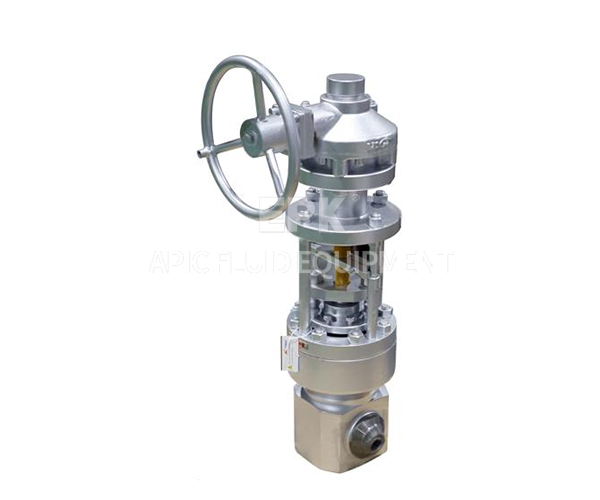
American standard gate valves are widely used in industrial piping systems because they are reliable,
durable, and especially easy to operate. From power plants and oil & gas pipelines to water treatment
and HVAC systems, the American standard gate valve has become a universal shut‑off device.
This article explains in detail why the American standard gate valve is easy to operate,
covering design principles, standards, specifications, typical configurations, and application scenarios.
The content is written in clear English and optimized for search engines, ideal for blogs, catalog pages,
and industry information pages.
An American standard gate valve is a shut‑off valve designed and manufactured in
accordance with American industrial standards such as ASME, ANSI, API,
and MSS. It uses a flat or wedge‑shaped gate (disc) that moves vertically to the
direction of the medium flow to start or stop the flow.
When the gate is lifted completely from the valve seat, the flow passage becomes almost straight,
creating very low pressure loss. When the gate is fully lowered, it provides a tight shut‑off,
effectively isolating the upstream and downstream pipeline.
Gate valve definition:
A gate valve is a linear motion shut‑off valve that uses a gate element to control the
opening and closing of the flow passage. It is primarily used for fully open or fully closed
service rather than throttling.
The term “American standard” indicates that the gate valve is designed according to
American standard systems. Typical dimensions, pressure ratings, and test requirements
follow these standards:
Because of unified standards, American standard gate valves have interchangeable dimensions,
predictable performance, and easy operation across a broad range of industrial installations.
The American standard gate valve is considered easy to operate because its design focuses on
operator ergonomics, low friction, clear position indication, and standardized interfaces.
Combined with high‑quality sealing surfaces and rational stem design, the torque required to open
and close the valve is significantly reduced compared with many other valve types.
Key reasons include:
The following sections break down how American standards and engineering details work together
to make the gate valve easy to operate in real‑world conditions.
American standard gate valves are typically designed and tested according to a combination of
standards. These standards ensure that the gate valve is safe, easy to operate, and
compatible with existing pipelines.
| Standard Code | Full Name | Scope Related to Gate Valves |
|---|---|---|
| ASME B16.34 | Valves – Flanged, Threaded, and Welding End | Design, materials, wall thickness, and pressure–temperature ratings |
| ASME B16.5 | Pipe Flanges and Flanged Fittings | Flange dimensions and pressure classes for flanged end gate valves |
| API 600 | Steel Gate Valves – Flanged and Butt‑Welding Ends | Design, materials, and testing of bolted bonnet steel gate valves |
| API 602 | Compact Steel Gate Valves – Flanged, Threaded, Welding Ends | Small forged steel gate valves typically up to Class 800–2500 |
| API 603 | Corrosion‑Resistant, Bolted Bonnet Gate Valves | Thin‑walled, corrosion‑resistant alloy gate valves |
| API 598 | Valve Inspection and Testing | Pressure test procedures for shell and seat leak testing |
| MSS SP‑25 | Standard Marking System for Valves | Identification marks for size, rating, material, and manufacturer |
| MSS SP‑55 | Quality Standard for Steel Castings | Visual inspection of surface quality for cast valve bodies |
These American standards contain specific provisions that directly influence how easy the
gate valve is to operate:
As a result, valves manufactured to American standards generally have predictable,
repeatable operating forces, which is a key advantage in large process plants.
The American standard gate valve incorporates multiple design features to ensure that both
manual and automated operation require minimal effort and provide reliable shut‑off.
American standard gate valves typically use either a solid wedge gate,
flexible wedge gate, or a parallel slide gate.
Solid wedge gate: Simple, robust, and suitable for most applications.
It provides a straight sealing surface that contacts the valve seats uniformly, allowing
the gate to slide smoothly with less risk of sticking.
Flexible wedge gate: Has a groove or cut to provide slight flexibility.
It can adapt better to seat misalignment and thermal deformation, reducing jamming and
making the valve easier to operate under varying temperatures.
Parallel gate: Uses parallel seats with a spreading mechanism. Operating
forces are well distributed, making it suitable for high‑temperature or high‑pressure service.
The geometry is optimized under American standards to reduce friction and avoid galling
between the gate and the seats, which directly affects how easily the valve can be opened or closed.
The stem is a key component in gate valve operation. It connects the handwheel
or actuator to the gate. American standard gate valves typically use two designs:
| Stem Type | Characteristics | Ease of Operation Benefits |
|---|---|---|
| Rising Stem | Stem moves up/down with handwheel; stem threads are outside the valve body |
|
| Non‑Rising Stem | Stem does not extend; gate moves along stem threads within the bonnet |
|
By following American design rules, the stem wall thickness, thread pitch, and bearing surfaces are
engineered to support smooth rotation with reasonable torque under rated pressure.
When an American standard gate valve is fully open, the gate retracts completely from the flow path,
leaving a nearly straight pipe bore. This creates very low flow resistance and
small pressure drops, which in turn:
Because of this streamlined flow path, an American standard gate valve is easier to operate
under high flow conditions than many other valve types such as Globe valves.
The sealing interface between the gate and the seat rings is critical. American standard gate valves
carefully define seat angle, surface finish, and hardness. Typical features include:
With smoother contact surfaces and proper alignment, friction is reduced, making the gate move more easily
between the open and closed positions while still achieving a tight seal.
American standard gate valves are designed with ergonomic handwheel diameters
and standardized yoke dimensions that make them easy to operate manually or with actuators.
pneumatic actuators
This standardized interface contributes to low installation complexity and easy operation across various projects.
The bonnet and packing system also influence operating ease. Typical American standard gate valves use:
Correctly designed and maintained packing reduces stem friction and leakage, allowing the gate valve
to remain easy to operate over many cycles.
American standard gate valves can be classified by multiple criteria such as body material,
end connection, stem type, and sealing structure. Each type affects how easy the gate valve
is to operate and maintain.
Each material follows American standards (e.g., ASTM A216, A351, A105, A182, etc.) to ensure predictable
mechanical performance and operating torque.
leak‑free joints.
OS&Y rising stem designs are especially easy to operate due to external threads and visual position indication.
The following table summarizes typical technical specifications for American standard gate valves
commonly used in industrial piping systems. Actual products may vary, but the table reflects
general ranges defined by American standards.
| Parameter | Typical Range / Options | Notes Related to Operation |
|---|---|---|
| Nominal Size (NPS) | 1/2" – 48" and above | Large sizes often equipped with gear or motor actuators for easier operation |
| Pressure Class | Class 150, 300, 600, 900, 1500, 2500 | Higher classes may require higher operating torque; gear operators are common |
| End Connection | Flanged, Butt‑Welded, Socket Weld, Threaded | End connection does not change operating principle, but affects installation method |
| Body Material | WCB, LCB, WC6, WC9, C5, C12, CF8, CF8M, CF3, CF3M, CI, DI | Material selection affects temperature range and corrosion resistance |
| Gate Type | Solid Wedge, Flexible Wedge, Parallel Slide | Flexible wedge and parallel slide help reduce jamming, improving ease of operation |
| Stem Type | Rising Stem (OS&Y), Non‑Rising Stem | Rising stem offers visual position indication and easier lubrication |
| Bonnet Type | Bolted Bonnet, Pressure Seal Bonnet | Pressure seal types for high pressure; both can remain easy to operate if maintained |
| Seat Type | Integral Seat, Renewable Seat Rings | Hard‑faced seat rings improve wear resistance and reduce operating torque over time |
| Operation | Manual (Handwheel), Gear Operator, Electric Actuator, Pneumatic Actuator | Actuators significantly reduce required human effort, especially on large/high‑pressure valves |
| Flow Direction | Bi‑directional (most designs) | Allows installation flexibility; seating design still keeps operation smooth in either direction |
| Design Standards | ASME B16.34, API 600, API 602, API 603 as applicable | Ensures predictable torque requirements and reliable operation |
| Test Standards | API 598 | Shell and seat tests verify reliable sealing and proper mechanical movement |
The ease of operating an American standard gate valve is tied not only to design but also
to the correct operating procedure. Proper use keeps torque levels low and extends service life.
Manual American standard gate valves typically use a circular handwheel. To operate:
Because of the engineered thread pitch and bearing areas, the gate can be moved using moderate
hand force, even on relatively high‑pressure systems, as long as the valve is not oversized
and is properly maintained.
For large diameter or high‑pressure American standard gate valves, a gear operator
is often fitted. Benefits include:
Gear operators are designed according to American guidelines to match the maximum operating
torque of the gate valve, which makes operation easy and safe.
In process plants and pipelines, American standard gate valves are often equipped with
electric actuators or pneumatic actuators:
Because the valve’s stem and gate mechanisms already require moderate torque, actuators
do not need extremely high power, resulting in compact, efficient automation solutions.
To keep an American standard gate valve easy to operate over time, typical best practices include:
American standard gate valves are used in many industries for on/off control of liquids and gases.
Their ease of operation makes them especially suitable for large pipelines and critical isolation points.
In these installations, American standard gate valves provide secure shut‑off and can be operated
manually or with actuators even under high pressure and temperature, thanks to robust design and standards.
Power stations (fossil fuel, nuclear, and combined cycle) use American standard gate valves to isolate:
At high temperature and pressure, pressure seal bonnet gate valves with alloy steel bodies remain
operable by using suitable gear or electric actuators, ensuring safe, reliable isolation.
In water treatment plants and municipal distribution networks, American standard gate valves:
Ductile iron or cast iron gate valves following American standards ensure compatibility with common
flanges and fittings, simplifying replacement and operation.
For corrosive media, American standard stainless steel gate valves are used. Their easy operation comes from:
The reasons American standard gate valves are easy to operate are directly related to their overall
advantages in industrial service.
Especially with rising stem (OS&Y) gate valves, operators can easily see whether the valve is
open or closed, reducing the risk of operation errors and saving time during maintenance or emergency shutdowns.
Because American standard gate valves comply with well‑known standards, operators and engineers are familiar
with their behavior. This familiarity makes:
American standard gate valves accept a variety of actuators:
These options ensure that even extremely large or high‑pressure gate valves remain easy to operate.
When operated according to standards, American standard gate valves provide tight shut‑off,
which means operators spend less time re‑operating or adjusting valves to achieve isolation.
Correct selection of an American standard gate valve ensures both easy operation and long service life.
The following guidelines cover key factors.
Material selection should match the medium and temperature:
and easy lubrication are important.
Ensure the selected valve is designed and tested according to relevant American standards
such as API 600, API 602, API 603, ASME B16.34, and API 598. This guarantees predictable
operating torque and easy interface with existing system components.
Even though American standard gate valves are designed for easy operation, proper maintenance
is necessary to keep them functioning smoothly and safely.
Many American standard gate valves, especially those with external stem threads or gear operators,
are designed with lubrication points:
For rarely used isolation valves:
American standard gate valves offer a nearly straight‑through flow path with minimal pressure loss
when fully open. This characteristic is ideal for large pipelines, and their design according to
American standards allows relatively low operating torque, especially when combined with gear or
actuator operation.
Gate valves are primarily designed for on/off service. Although an American standard gate valve
can theoretically be used partially open, doing so may cause vibration, seat damage, and increased
operating torque. For flow regulation, globe valves or control valves are typically recommended.
In a rising stem design, the stem moves up and down with gate travel. Operators can visually confirm
the valve position, lubrication is easier because threads are external, and corrosion of the stem
threads by the process fluid is minimized. These factors make rising stem American standard gate valves
especially easy and safe to operate.
American standard gate valves follow ASME, ANSI, and API rules for dimensions, pressure classes,
and testing. This standardization ensures high compatibility with global industrial equipment,
predictable operating torque, and widely available spare parts and actuators, contributing to
overall ease of operation and maintenance.
Yes. Most American standard gate valves are designed with actuator mounting interfaces. Electric,
pneumatic, or hydraulic actuators can be installed for remote and automatic operation. The internal
mechanisms are compatible with automation because the torque requirements are clearly defined by
the relevant standards.
American standard gate valves are widely recognized as easy to operate because of
their standardized design, low flow resistance, optimized gate and stem geometry, and compatibility
with manual, gear, and automated operation methods. Compliance with standards such as ASME B16.34,
API 600, API 602, and API 603 ensures predictable torque levels and reliable performance in a wide
range of industrial applications.
When properly selected, installed, and maintained, an American standard gate valve offers:
For engineers, specifiers, and operators, understanding the features and standards of American
standard gate valves is the key to choosing a valve that is not only technically suitable, but
also consistently easy to operate throughout its life cycle.
```
This website uses cookies to ensure you get the best experience on our website.

Comment
(0)