


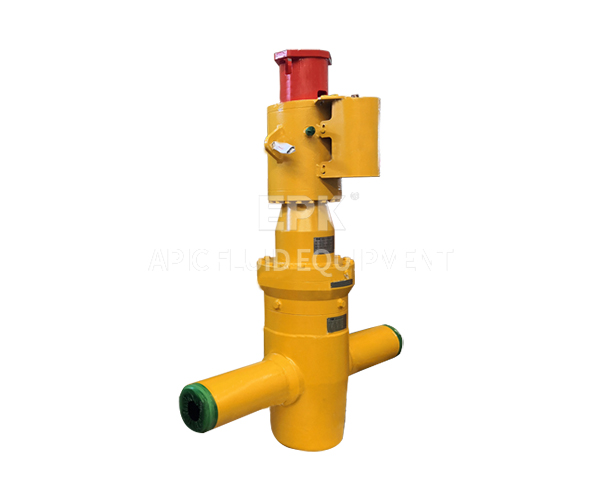
High Temperature and High Pressure Gate valve: Valve Disc Materials
Introduction
High temperature and high pressure (HTHP) gate valves are critical components in various industrial applications, including power generation, oil and gas, chemical processing, and petrochemical industries. These valves must withstand extreme conditions while maintaining reliable operation and tight shut-off. The valve disc, as the primary sealing element, plays a crucial role in the valve's performance. This paper examines the various materials used for valve discs in HTHP gate valves, discussing their properties, advantages, and suitable applications.
Common Valve Disc Materials for HTHP Gate Valves
1. Stainless Steels
Stainless steels are among the most widely used materials for valve discs in HTHP applications due to their excellent corrosion resistance and good mechanical properties at elevated temperatures.
**304/304L Stainless Steel:**
- Contains 18-20% chromium and 8-10.5% nickel
- Good general corrosion resistance
- Operating temperature up to 800°F (427°C)
- Used in moderate temperature and pressure applications
**316/316L Stainless Steel:**
- Contains 16-18% chromium, 10-14% nickel, and 2-3% molybdenum
- Superior corrosion resistance compared to 304, especially against chlorides
- Operating temperature up to 800°F (427°C)
- Common in chemical processing and marine applications
**347 Stainless Steel:**
- Stabilized with niobium to prevent carbide precipitation
- Excellent resistance to intergranular corrosion
- Suitable for temperatures up to 800°F (427°C)
- Often used in power generation applications
2. Duplex and Super Duplex Stainless Steels
These materials offer a combination of high strength and excellent corrosion resistance.
**2205 Duplex Stainless Steel:**
- Contains 22% chromium, 5-6% nickel, and 3% molybdenum
- Twice the yield strength of standard austenitic stainless steels
- Excellent resistance to stress corrosion cracking
- Operating temperature up to 600°F (316°C)
- Used in offshore and chemical processing applications
**2507 Super Duplex Stainless Steel:**
- Contains 25% chromium, 7% nickel, and 4% molybdenum
- Higher corrosion resistance than standard duplex
- Suitable for more aggressive environments
- Operating temperature similar to 2205
3. Nickel-Based Alloys
For more severe service conditions, nickel-based alloys provide superior performance.
**Inconel 625:**
- Contains approximately 58% nickel, 20-23% chromium
- Excellent resistance to oxidation and corrosion
- Maintains strength at temperatures up to 1800°F (982°C)
- Used in high-temperature steam and chemical processing
**Hastelloy C-276:**
- Nickel-molybdenum-chromium alloy with tungsten
- Outstanding resistance to pitting and crevice corrosion
- Suitable for highly corrosive environments
- Operating temperature up to 1900°F (1038°C)
**Monel 400:**
- Nickel-copper alloy (67% Ni, 30% Cu)
- Excellent resistance to seawater and hydrofluoric acid
- Operating temperature up to 1000°F (538°C)
- Common in marine and chemical applications
4. Cobalt-Based Alloys
**Stellite 6:**
- Cobalt-chromium-tungsten alloy
- Exceptional wear and galling resistance
- Often used as a hard-facing material on valve seats and discs
- Maintains properties at high temperatures
- Common in severe service valves
5. Titanium Alloys
**Grade 2 Titanium:**
- Commercially pure titanium
- Excellent corrosion resistance, especially against chlorides
- Lightweight compared to other materials
- Operating temperature up to 600°F (316°C)
- Used in seawater and chemical applications
**Grade 5 Titanium (Ti-6Al-4V):**
- Titanium alloy with 6% aluminum and 4% vanadium
- Higher strength than pure titanium
- Good corrosion resistance
- Used in aerospace and marine applications
6. Carbon and Low Alloy Steels
For less corrosive but high-pressure applications, carbon and low alloy steels are sometimes used.
**ASTM A216 WCB:**
- Carbon steel casting
- Suitable for temperatures up to 800°F (427°C)
- Economical choice for non-corrosive services
**ASTM A217 WC6/WC9:**
- Low alloy chromium-molybdenum steels
- Better high-temperature strength than carbon steel
- Used in power generation applications
Material Selection Considerations
When selecting valve disc materials for HTHP gate valves, several factors must be considered:
1. **Temperature Requirements:** Materials must maintain their mechanical properties at operating temperatures.
2. **Pressure Rating:** The material must withstand the system pressure without deformation.
3. **Corrosion Resistance:** Must be compatible with the process media to prevent premature failure.
4. **Thermal Expansion:** Coefficient of thermal expansion should be compatible with other valve components.
5. **Wear Resistance:** Important for applications with frequent operation or abrasive media.
6. **Cost Considerations:** More exotic materials significantly increase valve cost.
7. **Manufacturability:** Some materials are more difficult to machine or cast into valve components.
Special Treatments and Coatings
To enhance performance, valve discs often receive special treatments:
1. **Hardfacing:** Application of Stellite or other hard materials to seating surfaces to prevent galling and wear.
2. **Surface Treatments:** Nitriding, carburizing, or other surface hardening processes.
3. **Coatings:** PTFE, ceramic, or other specialized coatings for specific applications.
4. **Electropolishing:** Improves surface finish and corrosion resistance.
Industry Standards and Specifications
Various standards govern material selection for HTHP gate valves:
1. **API 600:** Steel gate valves for petroleum and natural gas industries.
2. **ASME B16.34:** Valves - flanged, threaded, and welding end.
3. **NACE MR0175/ISO 15156:** Materials for use in H₂S-containing environments.
4. **ASTM Specifications:** Define material compositions and properties.
Emerging Materials and Future Trends
Recent developments in valve disc materials include:
1. **Advanced Ceramics:** Offering exceptional wear and corrosion resistance.
2. **Metal Matrix Composites:** Combining metal properties with ceramic reinforcement.
3. **High-Entropy Alloys:** New class of materials with potentially superior properties.
4. **Additive Manufacturing:** Allowing complex geometries and material combinations.
Conclusion
The selection of valve disc materials for High temperature and high pressure gate valves is a critical decision that impacts valve performance, service life, and reliability. From standard stainless steels to exotic nickel alloys, each material offers unique advantages for specific applications. Engineers must carefully consider operating conditions, media compatibility, and cost factors when specifying valve disc materials. As technology advances, new materials and manufacturing techniques continue to expand the possibilities for HTHP valve applications, promising even better performance in extreme service conditions.
This website uses cookies to ensure you get the best experience on our website.

Comment
(0)